

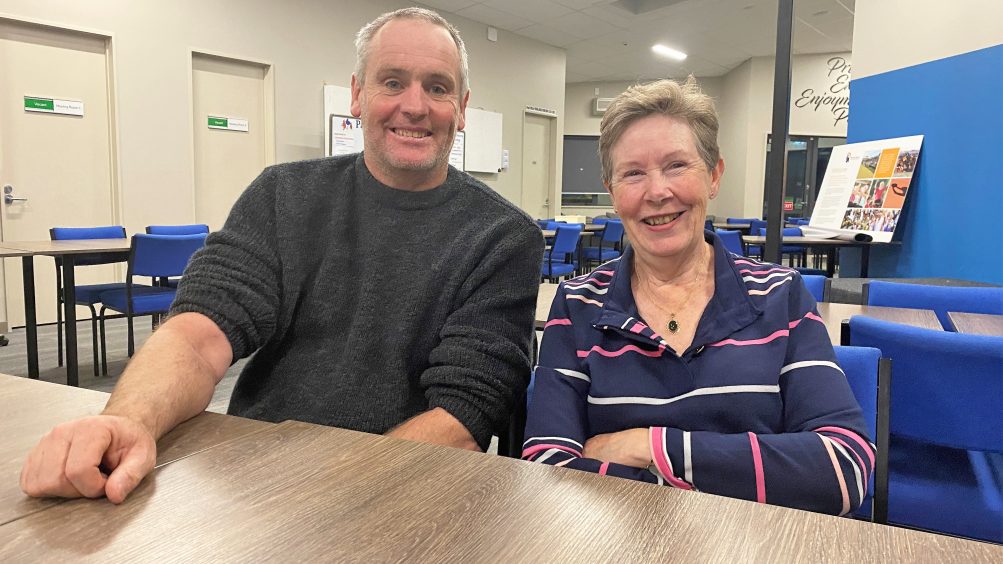

Steve Lilley and Cathy Musson
Parklands Bowling Club, in the northeast corner of Christchurch, is probably New Zealand’s youngest bowling club.
The club was established in 1990 … which doesn’t sound that young. And it isn’t. The Prime Minister for instance, would only have been in Standard 4. The average house price in New Zealand was only $80,000.
But when maybe half the 450+ bowling clubs in New Zealand are centenarians, being a mere tricenarian is indeed young.
The suburb of Parklands had only just been developed a few decades earlier. And emboldened by the fact that Christchurch had never had a decent earthquake for hundreds of years, the Christchurch City Council allowed the suburb to be built on sand and swamp,
So when the big quake struck in 2011, it was merciless.
Parklands was one of those suburbs we heard about on the tele. But what we didn’t hear about was the damage it had inflicted on the Parklands Bowling Club.
“We pretty much had to start from square one again,” says Club President, Steve Lilley. “The clubhouse, an old second-hand Keith Hay home we’d added to over the years, was a write-off. Our two greens were a rollercoaster … there was probably a foot between the highest and lowest points on the greens.”
Fortunately, members were able to continue bowling at St Albans-Merivale while the club got back together again.
The club teamed up with the Parklands Rugby Club and formed an umbrella organisation, the Pukeko Centre, sitting over the top of the bowling and rugby clubs. The aim was to create a community multi-sport facility, rather than just a bowling club.
“We were lucky,” recalls Steve. “We were able to buy the ‘modern learning centre’ of the recently built Freeville Primary School off the Department of Education for a dollar … their land in New Brighton had been red-zoned, and the whole school had been written off.”
“Of course we still had to move it. And build a concrete slab to put it on. But with a payout from our insurance and grants from the Rata Trust, Lotto and a number of others, we came up with the million to do the job. They had to cut the building into four to shift it (it’s 435 square metres!), and build one of those new ribraft concrete foundations which would ‘float’ on top of the ground.”
“The rughy club, helped by our own club members, have since added a large deck, and we’ve ended up with a clubhouse we’d never have dreamed of.”
“At the same time, we’ve rebuilt the two greens. And even future-proofed them as much as we can against earthquakes. The gutters for instance, have concrete bases to provide a strong frame in which the greens sit.”
But all this has only been Stage 1.
“Our aim is to get other sports and community groups involved,” says Club Committee Member Cathy Musson. “Not just the Parklands Rugby Club. The QE2 Swim Club and the Pegasus Ladies Club are now using the facility. And we’re planning to get netball, basketball, and petanque here.”
“We’re going to end up with a large membership across a whole lot of sports and community groups. Here at the bowling club we already have 150 active bowlers (half affiliated and half non-affiliated) which is up from 100 a few years ago. Plus we have another 25 or so social members. Membership’s going to be a lot more.”
“Stage 2 of the Pukeko Centre plan is to build a sports hall next door to the clubhouse. We’ve already laid the concrete slab, and we’re currently working on getting the million dollars needed to press the green light to build a structure that can be closed in. We can then finish it off as funding allows.”
“The new sports hall will have toilets and showers and a full-sized basketball court, plus ditches to give us a 29 metre long ‘green’ to play indoor bowls.”
“Stage 3 will be about finishing off the carpark. We’ve started work using grant funding that was due to expire, but it won’t be finished off until the heavy machinery required to build the sports hall has been and gone.”
“Stage 4 will be the netball courts and landscaping.”
It’s an ambitious project. But given what the club’s done since the earthquake, and what it’s doing now, you’d have to bet that it’s all going to happen.
“People want this club, and love what we’re doing,” says Steve. “There’s people here in the clubhouse every night of the week … on club night, perhaps 50 or more. It’s a working club which is growing more and more, and will continue to grow as more and more new housing comes to the area.”
Watch this space!
